
Life Lessons from the Dance Floor

inspirational musings from a dancing scientist

  • Identities

    Identities

    In the world of dance, each style has its own unique identity. For example, in ballroom dancing the Waltz is elegant and graceful; Tango is dramatic and passionate; Quickstep is lively and playful. When I dance each style, I embody its identity. Identity as relating to sense of self is a highly complex topic, encompassing multiple types and sub-types, far beyond the scope of this blog. But I have been reflecting on my own identity(ies) after retiring from the federal government last December.

    Yesterday at a friend’s retirement party, the topic came up. When chatting with other recent retirees, I asked, “What did you do in your career and what are you doing now?” Former technical writers and computer programmers and marketing consultants lit up when sharing about their new chapters as writers and artists and musicians.

    Since leaving my scientific career, I’ve been focusing on creative passions including writing and dancing. My publisher encouraged updating my social media accounts, which invite a short bio. It’s an interesting exercise to sum oneself up in <100 characters. I wrote, “mother, author, scientist, mentor, dancer, traveler…” This list is incomplete, and does not convey the depth and personal meaning of the roles I cherish, or their interconnectedness. As Walt Whitman said, “I am large, I contain multitudes.”

    When missing my scientist persona (e.g., I was recently introduced as “Val, the substitute bowler” after being “Dr. Valerie Zartarian” throughout my career) and feeling a need to solve my personal identities integration problem, another quote (from Watering the Soul by Courtney Peppernell) reminded me that I don’t have to: “Sometimes it isn’t so much about stitching yourself together but rather about unraveling all that you thought you were and all that you thought you knew…”.

    Who do you say you are?
  • Turns in Dance and Life

    Turns in Dance and Life

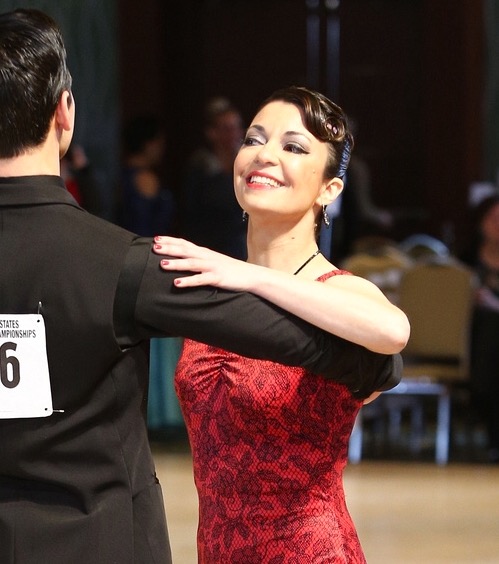
    Basic moves in Viennese Waltz are natural (clockwise) and reverse (counterclockwise) turns, with change steps (a three-count connecting figure) in between. As my ballroom dance teacher has been breaking these down for me to practice, I’ve been reflecting once again on how dance mirrors life.

    With my family life, I view getting married and having children as natural turns. Those life transitions followed expectations, and might have appeared to flow as easily as a standard Waltz, despite their challenges. On the other hand–estrangements, chronic illness, divorce, and empty nest transition were change steps and reverse turns that threw me off balance and made me stumble and falter.

    In my education, graduating from elementary to middle to high school to college to grad school were natural turns. My hard work propelled me through the grades, as dedicated practice makes the Foxtrot look deceptively effortless when dancers float around the ballroom. School vacations and breaks were change steps, necessary to take a few breaths before pivoting to the next sequence of moves.

    My intense scientific career also flowed easily for me with extremely hard work, akin to a fast Viennese Waltz (typically danced at a tempo of 180 beats per minute). Promotions and awards were natural turns, and temporary position details (lateral assignments) were change steps. A dramatic reverse turn was unexpected early retirement, when the federal workforce was downsized in 2025. That sent me reeling, until I regained balance in my new phase of life focused on creative endeavors.

    Turns in both dance and life can be exhilarating, challenging, and rewarding. Even though reverse turns may feel unnatural, resisting them can be detrimental — and they are an important part of the dance, in the ballroom and in life!

    Which change steps and turns have made the most impact in your life?

  • Out of My League

    Out of My League

    The phrase “out of my league,” with a sports origin, refers to a skill too advanced for one’s current level. This weekend I volunteered as a substitute in a local bowling league, to try something new and because the 2023 documentary Join or Die (based on the 2000 book, Bowling Alone: The Collapse and Revival of American Community) made an impression. I was literally out of my league as a beginner among advanced longtime bowlers. They were welcoming, despite my low score, but I struggled to connect (e.g., asking why we need to switch lanes)–so, unfortunately, I felt as if I were “bowling alone.” That uncomfortable, newcomer feeling is something I’ve experienced many times in my life.

    In college, I boldly and naively tried out for activities out of my (Ivy) league, including: the theater club, where I learned my drama background didn’t qualify me for university-level plays; the tennis team, where I embarrassed myself playing against classmates who had been competing since they could hold a racket; crew team, for the coxswain position, despite having no rowing experience; and dance team, where I must have thought my high school roles in Pippin and West Side Story qualified me to compete against Princeton dance majors. I did not make any of those teams, which was humbling.

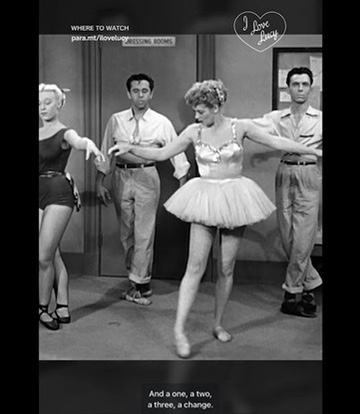
    For those college dance team tryouts, the captain placed me in the front row of the group of talented women auditioning. I was expected to instantly pick up the jazz choreography sequences in real time, with everyone behind me watching. The first count of 8 was OK. The second and third counts were less OK, and the first section had escaped my brain when she called out, “From the top!” And so on, and so on, until I felt like Lucille Ball in a hilarious I Love Lucy episode (see “Lucy Takes Ballet Lessons”).

    Now, as the only new student in my current adult group “advanced beginner” tap class — with a nationally-renowned teacher and several dozen women who have studied under her for years — I once again feel out of my league, just like Lucy in that dance scene. Only four weeks into the season, the choreography is so complex I need to study the video from class and practice at home, to keep up and avoid the teacher singling me out. And yet, I love the joy of movement, the camaraderie, the sound of tapping in unison, the satisfaction of tackling an intense mental and physical challenge.

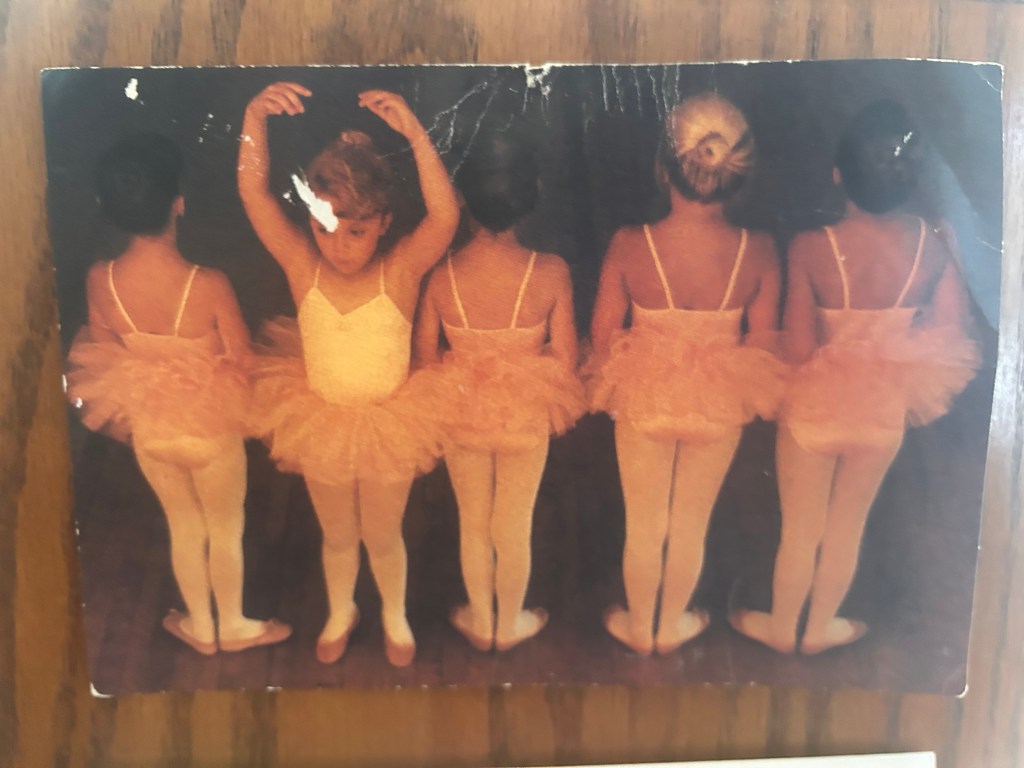
    Below is a favorite postcard I’ve had on my desk for decades. I’m proud of my younger and current self, willing to feel like a misfit (like the girl in the photo) for the sake of growth. I just saw this Kurt Vonnegut quote: “To practice any art, no matter how well or how badly, is a way to make your soul grow…”.

    What art have you practiced that felt out of your league at first?

  • Scary and Fun

    Scary and Fun

    Today my ballroom dance teacher Fitz and I worked on our Viennese Waltz show dance routine. He is challenging me, a longtime bronze level dancer, out of my comfort zone with silver and gold level choreography moves. The more complex footwork beyond basic natural and reverse turns includes progressive running steps and a “slingshot” move, where we continuously pass one another using leverage and momentum at a fast tempo. I was out of breath and exhilarated after the lesson, feeling as if I had just stepped off a rollercoaster.

    As Fitz said, the lesson was “scary and fun.” That got me thinking about how things in life can often be scary without being fun, and fun without being scary, but that combination together is special: performing, thrill rides, parenting, learning something new — to name just a few. What activities do you enjoy because they’re both scary and fun?

    Photo by Mylo Kaye on Pexels.com
  • Lightbulb Moments

    Lightbulb Moments

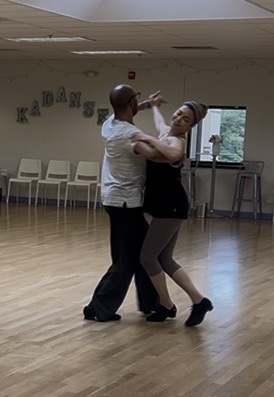
    At yesterday’s ballroom dance lesson, my teacher Fitz and I worked on cleaning up my Viennese Waltz footwork. I’m learning to dance independently (before going into dance hold), to clearly understand the mechanics of every movement with reverse turns, natural turns, change steps, etc.

    There was a moment when the lightbulb went off in my brain about why one of my transitional turns wasn’t working. We figured out I was doing 2 change steps where only 1 is needed, which meant I was not able to get back into partner hold easily. It was a satisfying feeling to “problem solve” the footwork issue then glide around the floor more smoothly, to uplifting Viennese Waltz music.

    These lightbulb “ah-ha!” problem-solving moments are always satisfying when they happen in daily life, off the dance floor, also. As another example — on a lovely evening at Follow Your Art Community Studios, I participated in an outdoor ukulele event where a few dozen people of all levels came to strum and sing along to favorite songs. I showed up as a novice with my new bright blue uke, and sat next to a kind woman who helped me learn the fingerwork for various chords. It was several hours of fun, community social connection, and lightbulb moments!

    What lightbulb moments have you had recently?

    Photo by Erik Mclean on Pexels.com
  • Small World Discoveries

    Small World Discoveries

    Last weekend when I was out social Swing dancing, an older man who asked me to dance shared the exact address where he grew up when he introduced himself. I was speechless because a) that is not something one typically does, and b) it turns out that he grew up right across the street from my grandparents — and used to shovel their driveway six decades ago! He even remembered my grandfather’s name. What are the odds of this coincidence? As a child, I spent summers and holidays in that beautiful brick house my grandfather had built in the 1930s, and we both recalled the expansive view of Boston from the back patio. This was a surprising and unexpected connection on the dance floor.

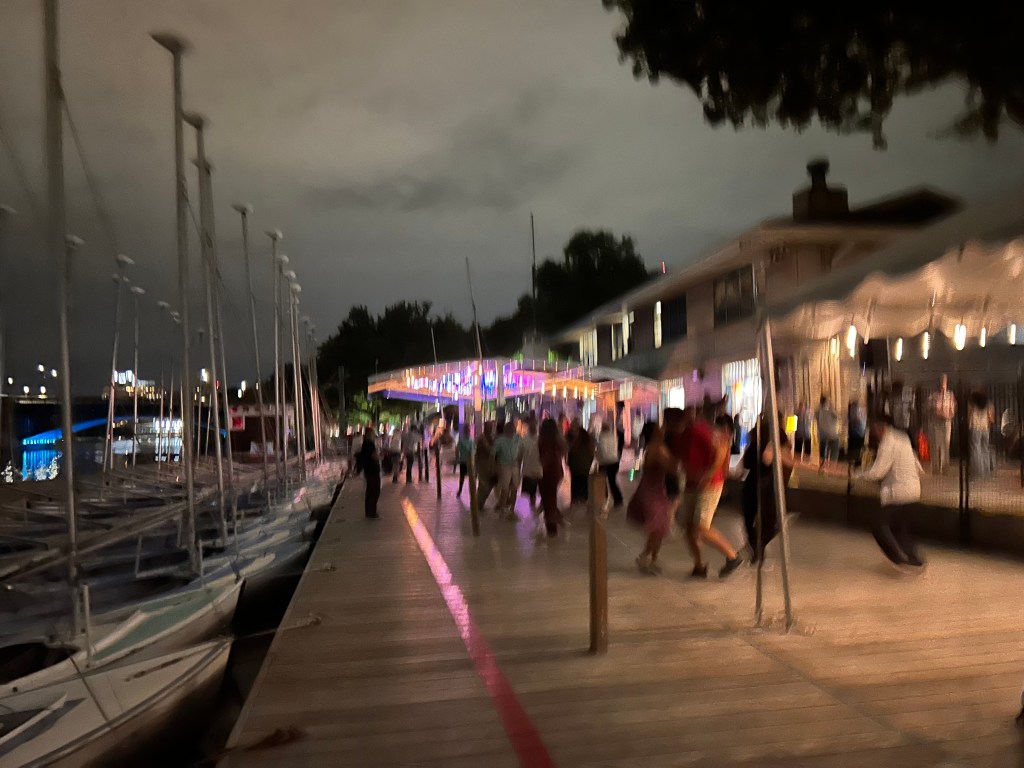
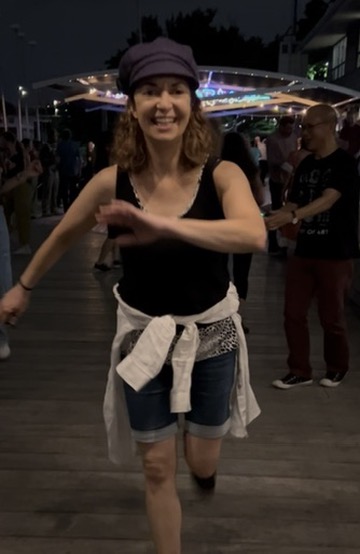
    Last night I danced at the annual “Swingin’ on the Charles” Swing Dance event at the Charles River boat house. The skyline, sailboats, and red line “T” crossing the Longfellow Bridge provided a quintessential Boston backdrop to the jazz music and dancers on the docks. One thing I love about Swing Dance is that people who show up to social dance are passionate about this style and happy to dance with others, even much younger or older than themselves. I was happy to see a predominance of twenty-somethings from the local universities, mixing with dancers from various other ages up through their seventies.

    A young man in his late twenties asked me to dance, and commented that the Boston waterfront view reminded him of Seattle, where he’s from. I told him I used to visit Seattle often when I lived in California. After some back-and-forth conversation–while we were practicing back-and-forth Swing, Charleston and Lindy Hop moves–we discovered that we attended the same California graduate school for our PhDs in engineering, years apart.

    These two “small world” discoveries through casual dance floor conversation make me wonder how many more would be uncovered through more social connections and conversations on dance floors and other places in our day-to-day lives. What “small world” coincidences have you experienced?

  • Swing Dance Freedom

    Swing Dance Freedom

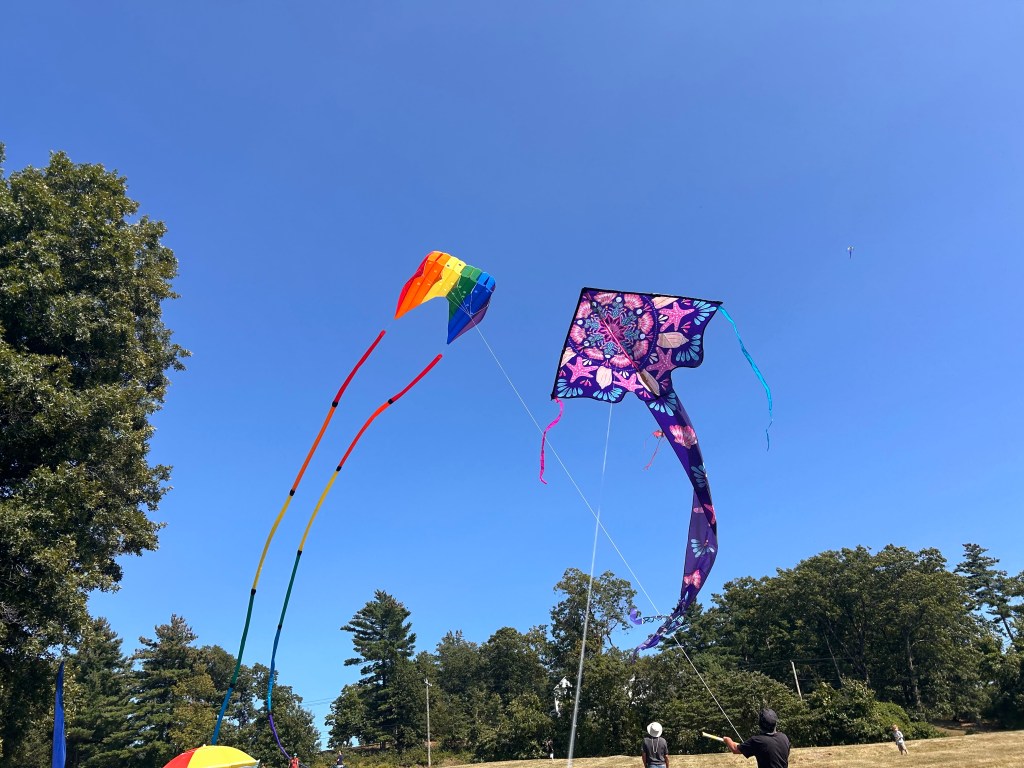
    Last night I enjoyed a Swing Dance party in the city with live music. Today I had fun at a kite festival in rural MA on a perfect summer day. As an introvert, it takes energy for me to motivate to get out to events with crowds, but I always enjoy the uplifting feeling from social connection.

    The first hour of the party was a dance lesson, where everyone formed a circle and rotated partners every few minutes as we learned new steps together from the teachers. Rock step, triple step, triple step. Rock step, triple step, triple step. Being in closed hold after introducing oneself briefly to many others of various ages, abilities, and backgrounds — with a common love of dancing — is a great antidote to the isolation of our heavily online society.

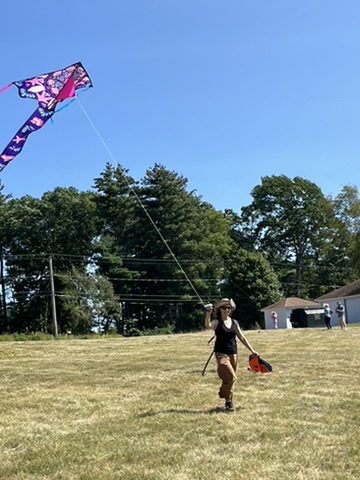
    At the festival when a friend and I were struggling to assemble our new kites, we asked two other women who walked by if they had experience. Amazingly, one was a world champion kite flyer, who happily took the time to help me assemble my kite and get it soaring with very little wind!

    Something else these two events had in common, besides social connection and a friend who joined me for both, was the freedom and joy of movement. The kites dancing together as they rose in the wind reminded me of the feeling of East Coast Swing. Rock step, triple step, triple step. Rock step, triple step, triple step. The crowd of colorful kites against the blue sky backdrop reminded me of the dance floor full of people smiling, swaying, bouncing, and experiencing the thrill of Swing Dance freedom.

  • Community Line Dancing

    Community Line Dancing

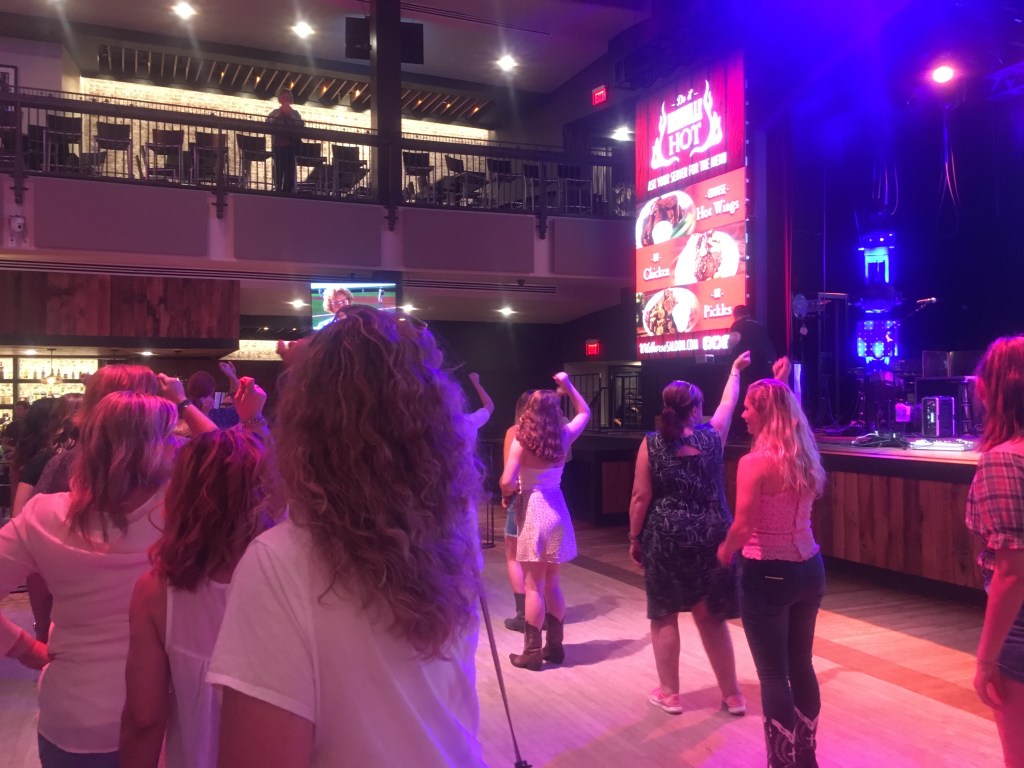
    The last few weeks I signed up for beginner line dancing lessons in my town, held at the local VFW building that has a stage and dance floor. It was taught by an enthusiastic young woman who is a competitive line dancer at her university and was home for the summer. I had only tried this form of dancing once before, at the Wildhorse Saloon in Nashville (pic below), and recalled correctly how much fun it is. Not only did I enjoy the country music songs and learning new steps and choreographed line dance routines, I also enjoyed the comraderie of people (mostly women of various ages) learning and practicing these in unison. The first time I went alone, the second time with a friend, and the third time with a different friend and my daughter. Each class was an enriching new life experience, and an opportunity to get out of my house and socialize with others in my community. I am inspired to do more social swing dancing this fall, along with more ballroom lessons and group tap classes!

  • Off Script

    Off Script

    Today I enjoyed a transcendent dance lesson with my teacher Fitz, as we started preparing a show dance for competitions and charity events. We focused on Waltz, Tango, and Viennese Waltz and combined steps from different levels (Bronze and Silver) and styles (International Standard and American Smooth). Instead of practicing Bronze level competition routines, we went “off script.” This means I did not know what move he would lead me into from one step to the next, so I needed to be even more present and in the moment than usual. There were numerous times I misstepped and almost ran into him, but overall I felt exhilaration, empowerment, and freedom as we zoomed and floated and spun around the dance floor. We laughed throughout the hour and I left the studio with a smile on my face that I’m still wearing hours later!

    As a scientist used to approaching life analytically, going “off script” is challenging for me. Throughout my research career I was always more comfortable reading notes for the numerous presentations I gave rather than impromptu public speaking. As I get older, I’m learning to let experiences unfold more organically and to be ok with an unstructured daily schedule. Once again, lessons I learn on the dance floor inform my life outside the studio, and vice versa.

  • Starstruck

    Starstruck

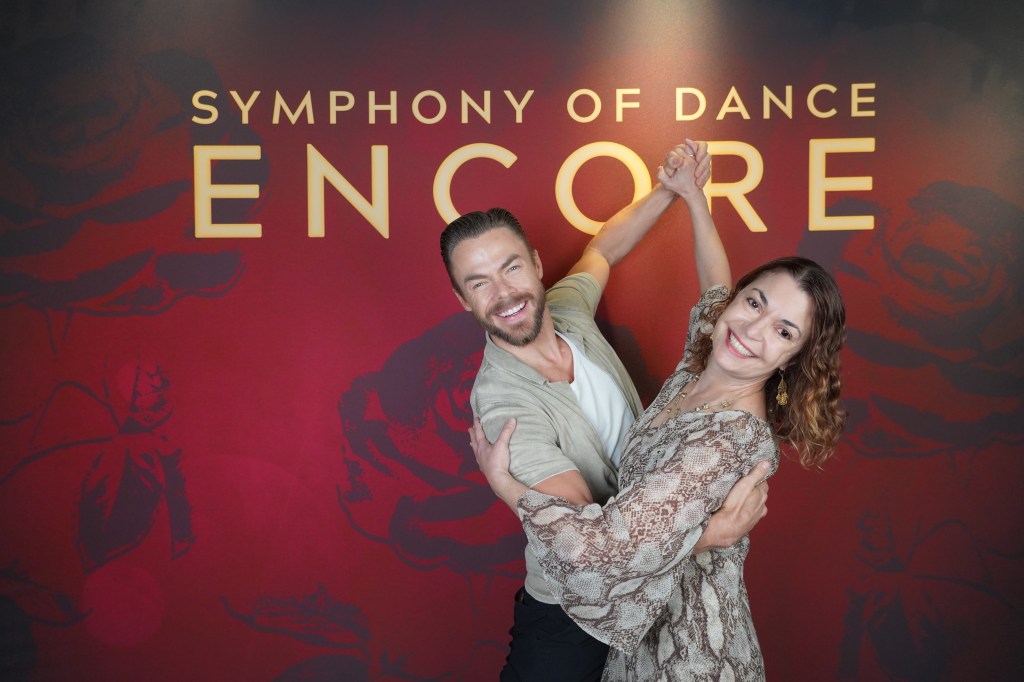
    Several weeks ago I attended Derek Hough’s Symphony of Dance Encore show in Boston with a VIP ticket I splurged on last winter, when I was immersed in Dancing with the Stars (DWTS) Season 34. I was starstruck to meet the Emmy-winning choreographer/dancer/actor/singer/tv personality, take this joyous photo with him, and participate in the Q&A session (his favorite dance styles? Paso Doble and Argentine Tango). Derek not only choreographed and starred in an incredible dance show (with his wife Hayley, a dancing miracle after a near-fatal brain bleed and surgery two years ago, along with a highly talented dance troupe), but also shared his vulnerability and gratitude with the audience. His positivity and zest for life was truly contagious with the audience and tangibly shifted my energy, reminding me again the therapeutic powers of dance.

    I was also grateful to make new friends in line and the seats next to me—kind New Englanders who also appreciate the beauty of dance and this amazing artist. I’ll add that watching DWTS over the years has brought me tremendous joy and comfort, including through pneumonia recovery and other tough times. I’m looking forward to next season, and inspired to work with my ballroom teacher on a Pro(fessional)-Am(ateur) showdance number. Thank you, Derek!